
Subdivision surveying
Cross-lease conversions, proposed boundaries and the path to titles.
Explore service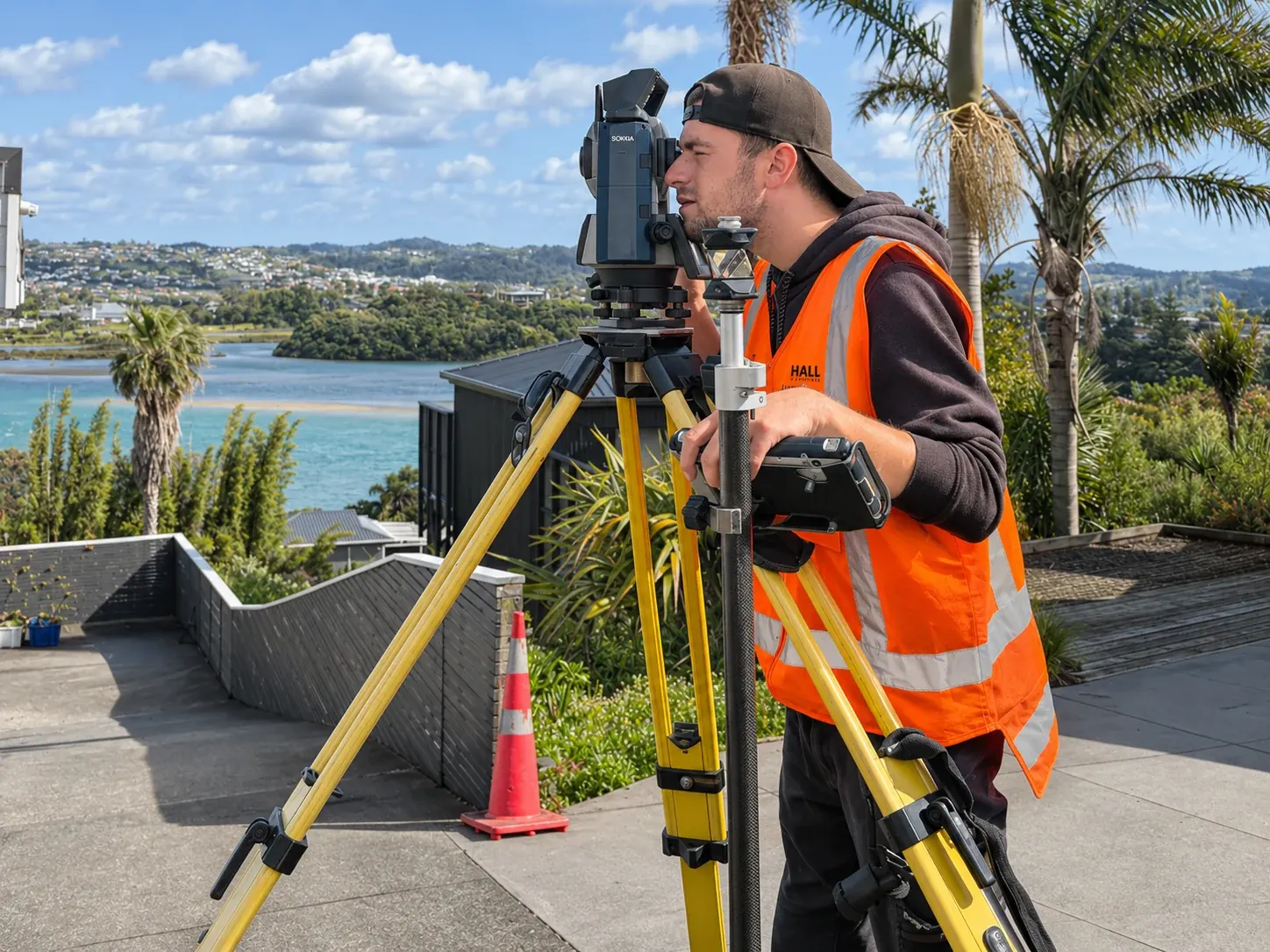
Ōrewa project · Site investigations
Hall Surveying was engaged to carry out a topographical survey and GPR utility locating at an Ōrewa property, and to arrange a specialist CCTV drainage contractor. The brief was to gather information for a proposed conversion from cross-lease ownership to separate freehold (fee simple) titles.
Bringing the surface survey, utility locating and drainage inspection together helps the project team assess the property with a more complete set of information.
Understand the property.
Above and below ground.
Existing buildings, driveways and underground services all matter when considering a new lot layout. Survey and investigation information helps the owners and their advisers consider boundaries, access, drainage and any shared service arrangements before the proposal progresses.
A topographical survey records site levels and visible features such as buildings, driveways and accessible drainage structures. This measured base helps the team consider the existing layout, proposed boundaries and access. A topo survey does not itself establish new legal boundaries.
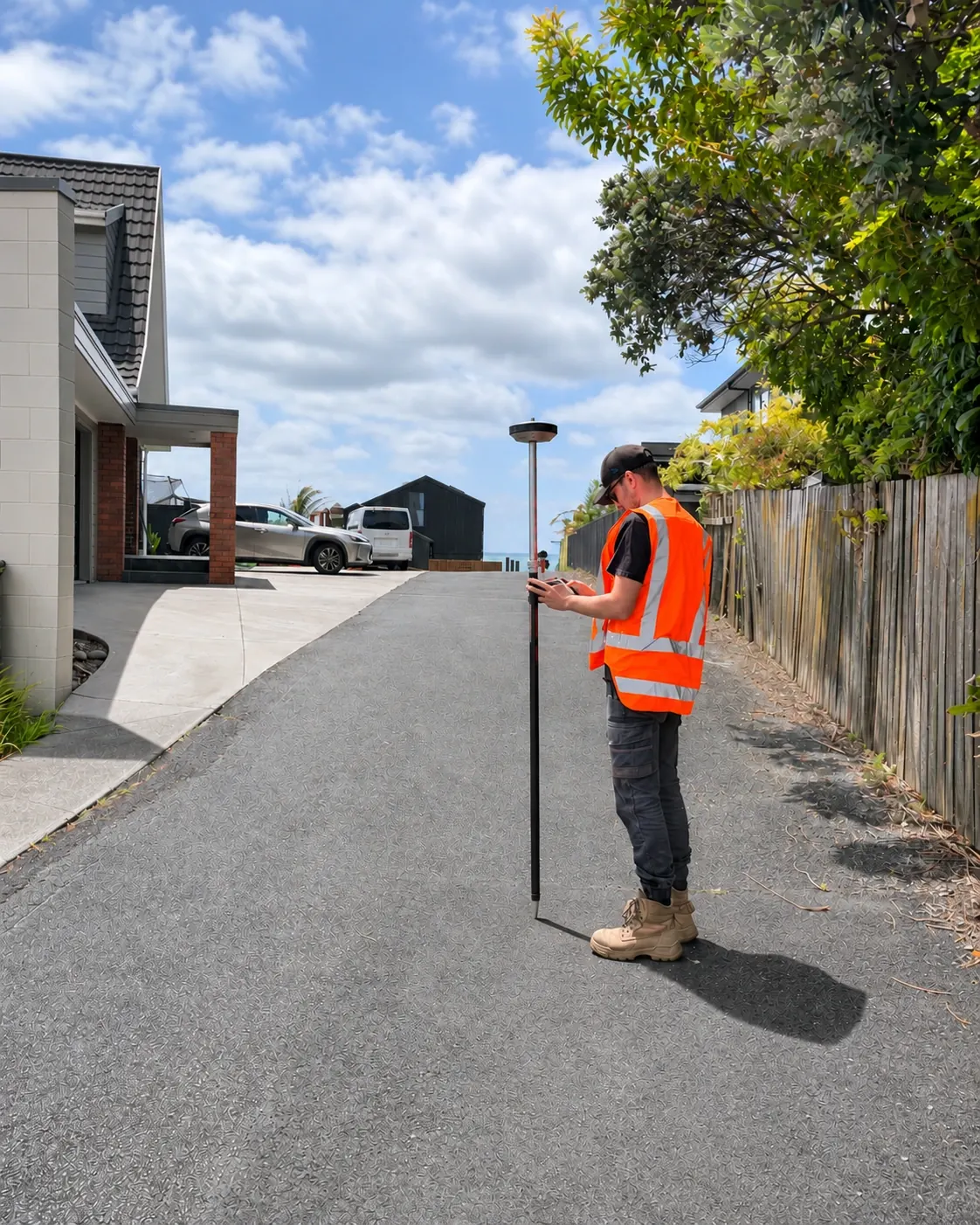
Topographical surveyingGPR and utility locating help investigate detectable underground services and how they relate to the proposed layout. Detection depends on ground conditions, access and the services present; it cannot guarantee every service is found.
GPR & underground servicesHall arranged a specialist contractor to inspect accessible drainage internally using CCTV. This can help assess pipe condition and connections, complementing the survey and locating work. The specialist’s findings inform the project team’s drainage assessment.
Ground measurements and on-site photography capture different aspects of the Ōrewa property. Together with the service investigations, this information provides a starting point for the project team’s assessment.
This project page covers investigations for a proposed conversion. It does not record subdivision consent being granted or new titles being issued. Further stages can be added as the project progresses.
Explore subdivision surveying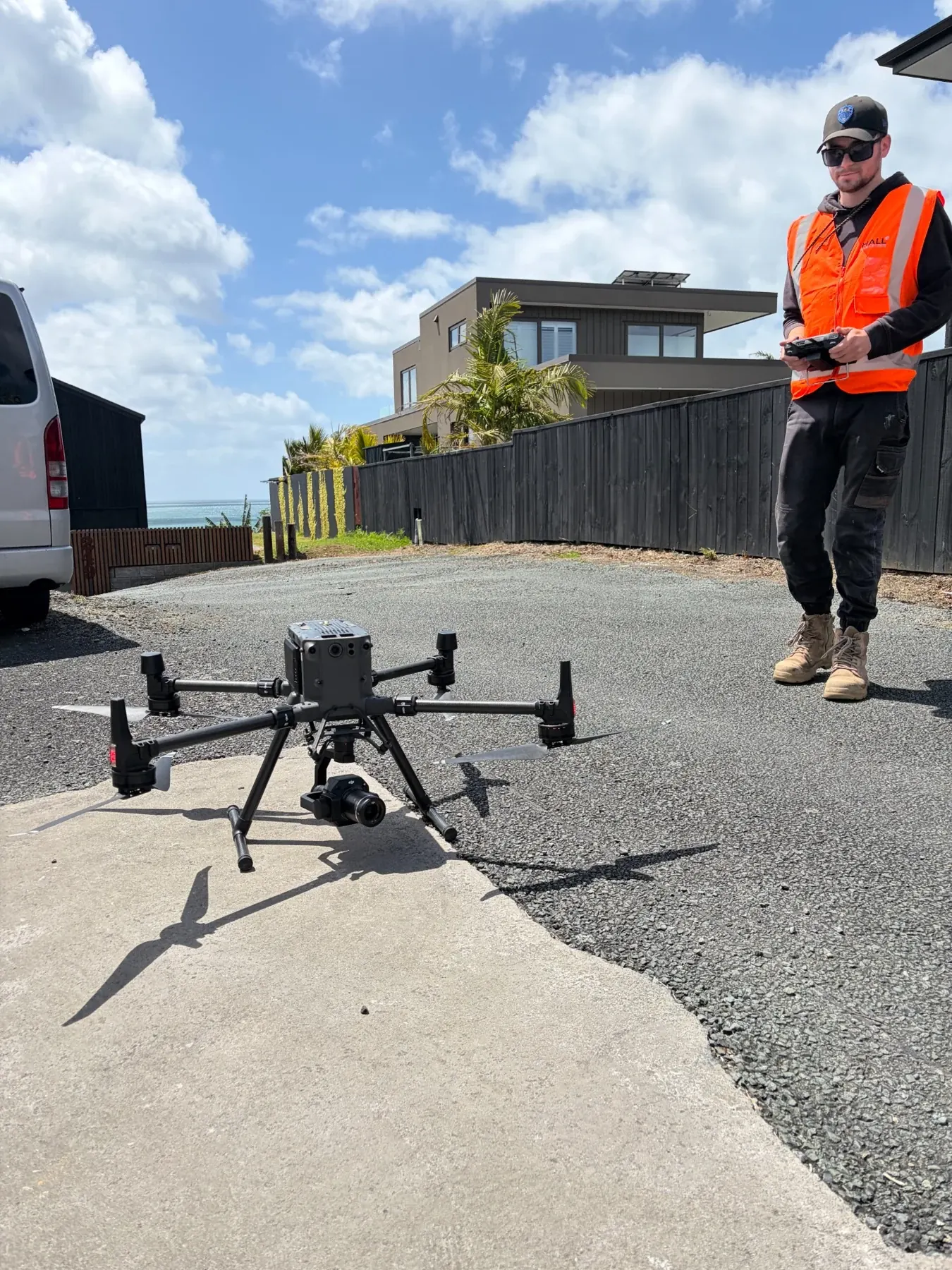
From shared land ownership
to separate fee simple titles.
A cross-lease combines a shared interest in the underlying land with a lease over a dwelling. A conversion to fee simple creates separate ownership of defined parcels of land. Shared access or services may still need easements or other legal arrangements.
Site investigations help the surveyor, planner, engineer and solicitor assess those arrangements. The requirements depend on the property and the proposal.
Review the titles, lease plan and site information with the co-owners and advisers. Develop the proposed boundaries, access and servicing arrangements and apply for the required subdivision resource consent.
Complete the cadastral survey and address consent conditions, any required works and Council certification, including sections 223 and 224(c) where applicable.
The surveyor and solicitor coordinate the survey and legal documentation for LINZ approval and registration of the new fee simple titles. Later stages depend on the owners’ decisions and site requirements.
“Fee simple” is the title term commonly used for a separate freehold parcel. Cross-lease owners already share an interest in the underlying freehold land; conversion changes that arrangement to separate fee simple titles, rather than simply buying land from an outside landlord.
Existing drainage may serve more than one dwelling or cross a proposed boundary. Surveying, locating and specialist CCTV inspection help the project team understand those arrangements and consider whether legal rights, further investigation or physical work may be needed. The requirements are specific to each site.
No. The investigation scope depends on available records, access, existing services and the information the project team needs. At this Ōrewa property, Hall’s brief included topo and GPR work plus arranging specialist CCTV inspection.
This case study covers investigations for a proposed conversion. It does not record subdivision consent being granted or new titles being issued. We can add further stages as the project progresses and details are confirmed.
Cross-lease conversions, proposed boundaries and the path to titles.
Explore serviceMeasured site levels and features for planning and design.
Explore serviceInvestigating underground services across Auckland.
Explore servicePLANNING A CROSS-LEASE CONVERSION?
Send the address, what you hope to achieve and any relevant plans. We’ll discuss the survey scope and investigations needed for your project.